Fake Deep: How the Cult of Realness Became the Biggest Act on the Internet
Somewhere between the tenth 'raw and unfiltered' confession video you watched this week and the carefully lit 'no makeup' selfie that took forty-five minutes to stage, something broke. The authenticity era of the internet didn't just peak — it curdled. And if you've been feeling vaguely nauseous scrolling through your feed lately, there's a decent chance you've already clocked why.
Being real has become a genre. A highly produced, algorithmically optimized, deeply competitive genre.
The Vulnerability Industrial Complex
Here's the thing nobody wants to say out loud: the 'authentic creator' pipeline is one of the most rigid aesthetic templates on the internet. Shaky camera? Check. Slightly hoarse voice, like you've been crying or at least thought about it? Check. A rambling intro that's actually been scripted to sound unscripted? Oh, absolutely.
This isn't an accident. Platforms actively reward content that performs emotional openness. The algorithm doesn't care whether your breakdown is genuine — it cares that the thumbnail communicates breakdown energy. And creators, being smart people trying to survive in an attention economy, figured that out fast.
The result is a kind of emotional arms race. Each confessional has to go a little harder than the last. Each 'I've never told anyone this' has to unlock a slightly more private room. Audiences, trained to sniff out inauthenticity, keep raising the bar for what counts as real — which means creators keep having to manufacture realer and realer performances of realness. It's turtles all the way down, and everyone's exhausted.
When Sincerity Becomes a Strategy
There's a term in literary theory — 'performative sincerity' — that's basically built for this moment. It describes the paradox of trying to communicate genuine feeling through a medium that, by its very nature, involves performance and selection. Every time you frame a shot, choose a filter, write a caption, or decide which vulnerable truth to share, you're making editorial choices. You're constructing a version of yourself. The raw footage doesn't exist.
Creators like Hailey Whitters or even early Olivia Rodrigo got celebrated for 'keeping it real,' but their realness was always also an aesthetic — carefully chosen instruments, specific lyrical registers, a particular kind of relatability that hit just right for a specific demographic. That's not a criticism. That's just how art works. The problem is when the culture insists the art isn't art, that it's just life, because that's when the pretense starts to corrode everything.
And audiences feel it. There's a growing, low-key exhaustion with the confessional mode — a sense that you're being emotionally manipulated even when the creator in question is being totally sincere. Because sincerity, weaponized at scale, stops feeling like sincerity. It starts feeling like a pitch.
The Artifice Rebels
So what do you do when 'being yourself' is the most crowded lane on the highway? Some creators are doing the most counterintuitive thing imaginable: they're going full fake. Deliberately, ostentatiously, joyfully fake.
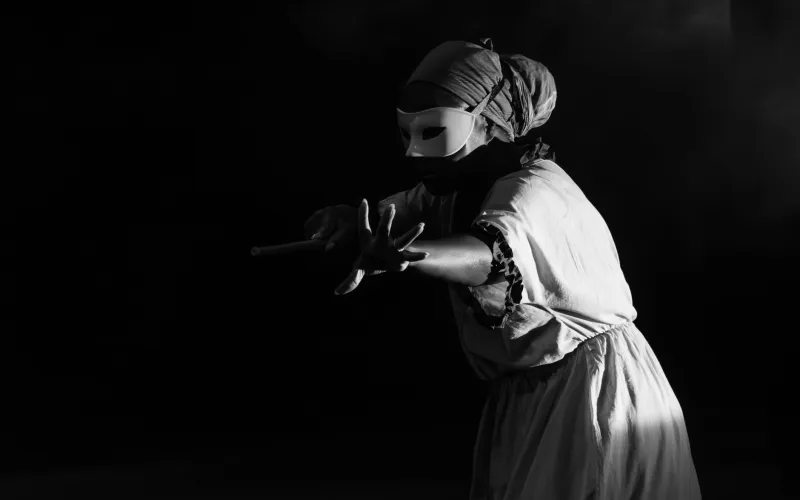
Think of the corners of TikTok and YouTube where creators are leaning hard into character work, surrealist roleplay, and constructed personas with zero pretense of 'this is the real me.' Artists building entire alternate identities — not as a brand exercise, but as a philosophical statement. The character is the honesty. The mask is the point.
There's something almost punk about it. When everyone else is competing to be the most unguarded, the most exposed, the most nakedly human — showing up in a sequined costume playing a fictional 19th-century botanist and refusing to break character is genuinely transgressive. It's a middle finger to the vulnerability economy dressed up as performance art.
And weirdly? It often communicates more truth than the confessional stuff does. A creator who builds an elaborate fictional world is telling you something real about their interior life — their obsessions, their aesthetics, their sense of humor — without having to hand over their actual trauma as content. There's a dignity in that. A boundary. And in 2025, a boundary is almost radical.
The Honest Lie
Philosophers have been circling this idea for centuries — the notion that fiction can carry more truth than documentary. Oscar Wilde was basically tweeting about this in 1889 when he wrote that 'The first duty in life is to be as artificial as possible.' He was being glib, but he wasn't wrong. Artifice, when deployed consciously, is a form of honesty about the constructed nature of all communication.
What the new wave of deliberately artificial creators seems to understand is that the 'authentic self' the internet keeps demanding doesn't actually exist in the form it's being sold. Identity is always a negotiation. Selfhood is always a performance. The only question is whether you're going to pretend otherwise or just lean into the theater of it.
Choosing the theater, paradoxically, is the more honest choice.
So What Does Real Even Mean Now?
Maybe we need to retire the word entirely — or at least stop treating it like a value judgment. 'Real' has become so overloaded with meaning that it's basically collapsed under its own weight. A creator in a dragon costume doing elaborate lore videos might be expressing something more genuine about who they are than someone crying on camera about their situationship, even if the crying video feels more real in the conventional sense.
The creators worth paying attention to right now aren't the ones promising the most unfiltered access to their inner lives. They're the ones who've made peace with the fact that everything is a construction — and are building something genuinely interesting with that knowledge instead of pretending it isn't true.
Authenticity as a concept had a good run. It pushed back against the hyper-polished, aspirational content that dominated the early 2010s, and that pushback was necessary. But the cure became the disease pretty fast. Now the most interesting digital art and creator work is happening in the space where nobody's pretending to be unperformed — where the artifice is explicit, the roleplay is the text, and the audience is smart enough to find the truth in the fiction.
Fake, it turns out, might be the new real. And honestly? That's a relief.