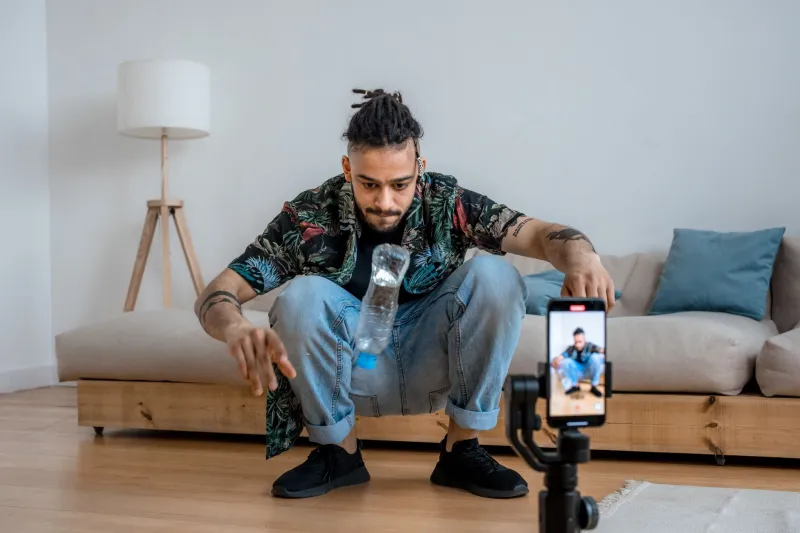
Logged Off, Tuned In: How Gen Z Creators Are Trading Follower Counts for Real Rooms
Here's a paradox worth sitting with: the generation that grew up chronically online — the one that learned to code before they learned to drive, that built entire identities inside TikTok's 60-second universe — is now the same generation quietly, deliberately, and sometimes defiantly walking away from the feed.
Not forever. Not completely. But enough to matter.
Across the US, something is shifting in how young artists and creators think about community, output, and what "success" even means. And the answer they keep arriving at isn't a new platform or a smarter content strategy. It's a physical room full of real people.
The Burnout Nobody's Talking About (Except Everyone Is)
Let's be honest — digital burnout isn't a new conversation. But what's different now is who it's hitting. We're not talking about millennials who remember life before smartphones and occasionally romanticize it. We're talking about 21-year-olds who have never known a world without the algorithm, and who are still choosing to opt out.
Creators who built genuine audiences — tens of thousands of followers, solid engagement, the whole package — are describing a kind of hollowness that metrics can't fix. The feedback loop of posting, waiting, optimizing, and posting again starts to feel less like expression and more like a second job with an unpredictable boss who changes the rules every quarter.
"I had like 40,000 followers and I felt completely alone," said one Brooklyn-based visual artist who now runs a monthly open studio night out of a Bushwick collective space. "The comments were nice, but nobody knew me. Nobody knew what I was actually trying to do."
That gap — between visibility and genuine connection — is exactly what's driving creators toward IRL alternatives.
What "Community" Actually Means When You Can Touch It
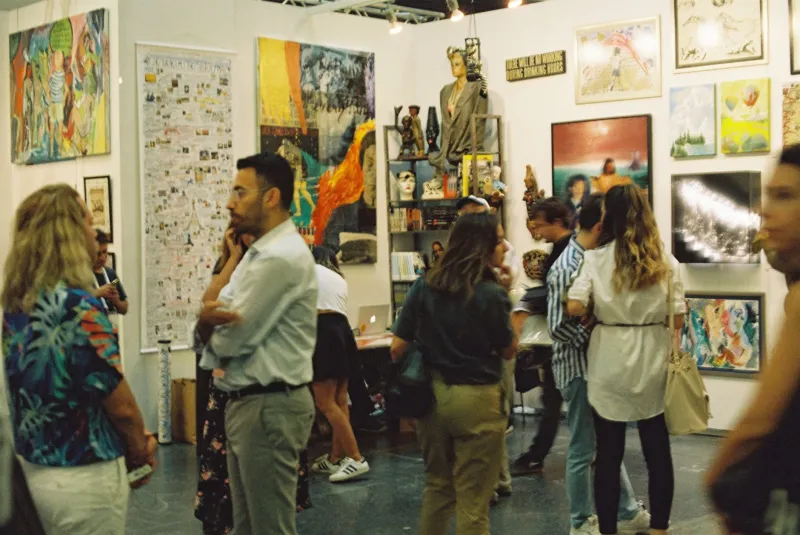
Pop-up galleries in converted laundromats. DIY music venues operating out of someone's living room in East Nashville. Zine fairs taking over parking lots in Silver Lake. Artist collectives in Detroit warehouses where twelve people share tools, ideas, and rent. These aren't nostalgic throwbacks — they're active, intentional infrastructure being built by people who understand digital spaces deeply enough to know what those spaces can't give them.
The tactile quality of these environments matters more than it might seem. When you show up to a gallery opening and have to physically navigate a room, make eye contact, explain your work to a stranger standing two feet away — something different happens. The feedback is immediate, embodied, and impossible to game. You can't A/B test a conversation. You can't schedule a meaningful moment for peak engagement hours.
There's also the beautiful chaos of unpredictability. Digital content is optimized within an inch of its life — thumbnails tested, captions workshopped, posting times calculated. IRL spaces resist that optimization. The projector dies. The crowd goes in a direction you didn't expect. Someone spills a drink on the merch table and somehow that becomes the best story of the night. That unpredictability isn't a bug. For a lot of creators, it's the whole point.
The Paradox That Isn't Really a Paradox
It would be easy to frame this as a contradiction — internet-native creators going offline — but that reading misses what's actually happening. These aren't people abandoning the digital world. They're using it differently.
The underground gallery still has an Instagram. The DIY venue still has a mailing list. The collective still posts process videos. But the center of gravity has shifted. The physical space is no longer just content fodder for the online presence. It's the main event. The digital channels become tools for serving the real community rather than the other way around.
This inversion is significant. For years, the dominant creator logic was: build online, leverage that into IRL opportunities. What's emerging now flips that script. Build something real and local first. Let the online stuff document it.
What the Algorithm Actually Costs
There's a less romantic reason young creators are moving offline, and it deserves direct acknowledgment: the economics of platform-dependent content creation are genuinely brutal.
Monetization is inconsistent, algorithm changes can erase years of audience-building overnight, and the platforms themselves absorb most of the value that creators generate. Building a local community — even a small one of a few hundred genuinely invested people — offers something the algorithm structurally cannot: stability that you actually own.
A monthly art market in a Chicago neighborhood doesn't vanish because Meta decided to prioritize a different content format. A collective that shares a studio space in Philadelphia doesn't lose its community because an app updated its recommendation engine. The physical world, for all its inconveniences, doesn't deprecate.
Creators are doing the math and realizing that 500 people who show up, buy things, and tell their friends are worth more — practically and emotionally — than 50,000 passive followers who might see your content if the algorithm feels generous that day.
The New Aesthetic of Presence
There's a cultural dimension here too, one that connects to broader conversations happening across art, music, and design. We're in a moment of deep suspicion toward polish. Audiences — especially younger ones — have developed finely tuned radar for content that's been engineered rather than felt. The perfectly lit, perfectly edited, perfectly captioned post now reads as a kind of dishonesty.
IRL spaces, by contrast, are inherently imperfect. The lighting is weird. The sound system is borrowed. The crowd is mixed and unpredictable. That imperfection signals authenticity in a way that no amount of "authentic content" strategy can replicate. It's the same impulse behind the return to film photography, hand-printed zines, and live-to-tape recording sessions — a hunger for things that carry evidence of human hands and real time.
The most interesting creators working right now aren't choosing between digital and physical. They're understanding what each space does well and refuses to do at all. And increasingly, they're centering their creative lives around the thing the screen can never fully simulate: being in a room together, making something, and feeling it land in real time.
The algorithm will always be there. The room won't wait forever.