Making Art for an Audience of Zero: The New Rebellion Happening Right Under the Algorithm's Nose
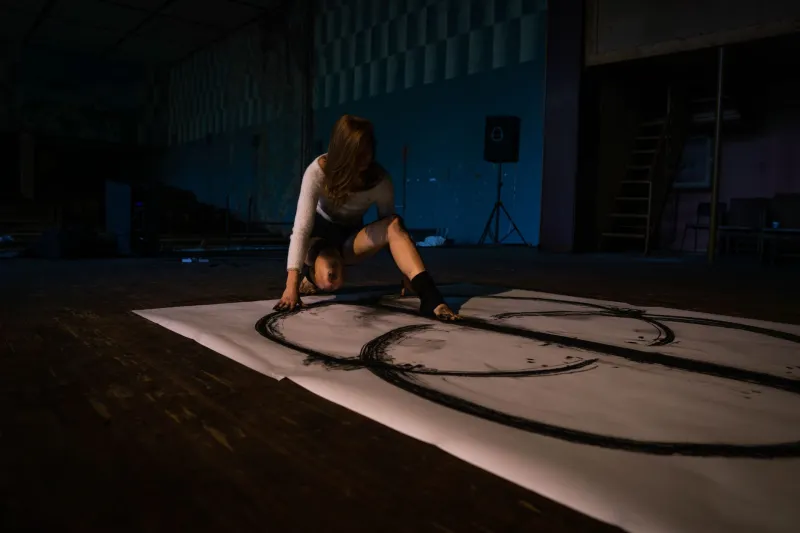
Somewhere in a Portland apartment, a 23-year-old named Dasha is finishing a short film. It's 47 minutes long, entirely in constructed gibberish language, and features a cast of three people playing the same character at different emotional temperatures. She has no distribution plan. No festival submissions lined up. No pitch deck. No monetization strategy.
She's also, by every conventional creative metric, doing it completely right.
"I made it because the idea wouldn't leave me alone," she says. "The moment I started thinking about who would watch it, it started dying."
This is the Attention Rebellion — and it's quietly becoming the most interesting counter-cultural movement in American creative life right now.
The Tyranny of the Metric
Let's be honest about what the last decade did to art. Platforms handed creators a dashboard — views, streams, saves, shares, watch-time percentages — and somewhere along the way, those numbers stopped being feedback and started being the point. The work became a delivery mechanism for data. Good art became whatever the algorithm rewarded. Experimental became risky. Strange became career-limiting.
And an entire generation watched it happen in real time.
Gen Z didn't just inherit the internet — they inherited the optimized internet. The A/B-tested, trend-chased, audience-researched, engagement-maximized version of it. They grew up watching creators sand down every rough edge, pivot mid-sentence when something underperformed, and gradually hollow themselves out chasing a moving target set by engineers in Silicon Valley.
Some of them decided: hard pass.
The Unmarketable as Manifesto
What's fascinating about this movement — if you can even call it that, since its participants are largely allergic to being organized — is that the rejection of marketability isn't accidental. It's philosophical. It's a deliberate creative position.
Take Marcus, a 26-year-old experimental musician based in Chicago who releases music under a name that's literally unpronouneable (three consonants, no vowels). His last "album" was a collection of field recordings from hospital waiting rooms, layered with microtonal drone and the sound of a fax machine he found in an alley. Runtime: 94 minutes. Available only as a download from a website that loads like it was built in 2003.
"If I made it easier to find, it would become something different," he explains. "The friction is part of the piece. The fact that you have to want it — really want it — changes what it means when you finally hear it."
This is the logic running underneath a lot of what's happening right now. Inaccessibility as artistic intent. Obscurity as a feature, not a bug. The refusal to optimize as its own form of statement.
Digital Natives Going Analog in Their Heads
Here's the twist that makes this movement genuinely interesting rather than just contrarian: it's not really about rejecting technology. These artists are often deeply fluent in digital tools — they know how to use them, they just choose not to use them for audience capture.
Jasmine, a 24-year-old visual artist and digital animator from Atlanta, creates sprawling interactive web pieces that take hours to fully explore and don't work on mobile. She's built intricate branching narratives using outdated web frameworks that crash on Chrome. On purpose.
"I'm not trying to be difficult," she says, laughing. "I'm trying to make something that rewards the kind of attention that the internet is actively training us not to have. If you can't slow down enough to experience it, that's information. That's part of what the work is saying."
The medium, in these cases, is genuinely the message — and the message is: your attention span has been colonized, and here's a thing that demands you take it back.
Why 'Making It for Yourself' Became Radical
There's an older idea here that these artists are reclaiming. The notion that art made without audience in mind is somehow purer, more authentic — this isn't new. But it lands differently in 2024 than it did in the 1970s loft-art scene, because the infrastructure of attention has never been more sophisticated, more pervasive, or more seductive.
Every platform now ships with built-in creator analytics. Every upload comes with implicit pressure to perform. The baseline assumption of digital creative life is that you are producing for consumption — and that your job is to make consumption as frictionless as possible.
Refusing that baseline, in this context, is actually a pretty wild thing to do.
It's also, paradoxically, starting to attract its own kind of audience — people exhausted by content that was clearly engineered to please them, who are desperately hungry for something that doesn't seem to care whether they show up or not.
"The stuff I make with zero intention of it being seen is the stuff people actually respond to when they stumble on it," Dasha admits, with visible ambivalence. "Which is kind of annoying, honestly."
The Anti-Brand Brand
There's a real tension at the heart of all this that the artists themselves are quick to acknowledge. The moment a movement gets named, it risks becoming an aesthetic — a posture that can be adopted, commodified, and sold back to the audience it was supposed to ignore.
"Unmarketable" is already becoming, in certain corners of the internet, a selling point. The deliberately obscure is developing its own prestige economy. And once something has prestige, the algorithm will find it.
Marcus is aware of this. "I'm not naive. I know that the inaccessibility thing can become its own kind of brand. I try not to think about it too hard or I'll just stop making music entirely."
Maybe that's the only honest answer available: keep moving, keep making, stay one step ahead of the moment the work becomes legible as a product.
What This Looks Like Going Forward
The Attention Rebellion probably won't scale. That's somewhat the point. But it's already doing something important — it's preserving a space in American creative culture where the question "will this perform?" is considered actively hostile to the creative process.
In a digital landscape where every piece of content is a potential data point, where every creator is quietly encouraged to think of themselves as a micro-brand, the act of making something genuinely unconcerned with its own reception is — and this isn't an exaggeration — a form of resistance.
Not the kind with a hashtag. Not the kind with a merch drop.
Just a person in a room, making something strange and specific and fully theirs, for an audience that might not exist yet. Or might never exist at all.
And somehow, in 2024, that's the most avant-garde thing you can do.