Closing the Velvet Rope: Why the Boldest Creators Are Building Smaller on Purpose
Success used to look like a number. Followers. Streams. Views. The bigger the number, the more real your career felt — to you, to your peers, to the brands sliding into your DMs with partnership decks.
But something's shifting. Quietly, deliberately, a growing cohort of artists, musicians, and digital creators are doing something that looks, on the surface, completely counterintuitive: they're making themselves harder to access. Closing the doors. Pulling up the drawbridge. And they're doing it on purpose.
This isn't a crisis. It's a strategy. And it might be the most interesting creative rebellion happening right now.
The Algorithm Made Them Do It
To understand why creators are fleeing public platforms, you have to understand what public platforms actually cost.
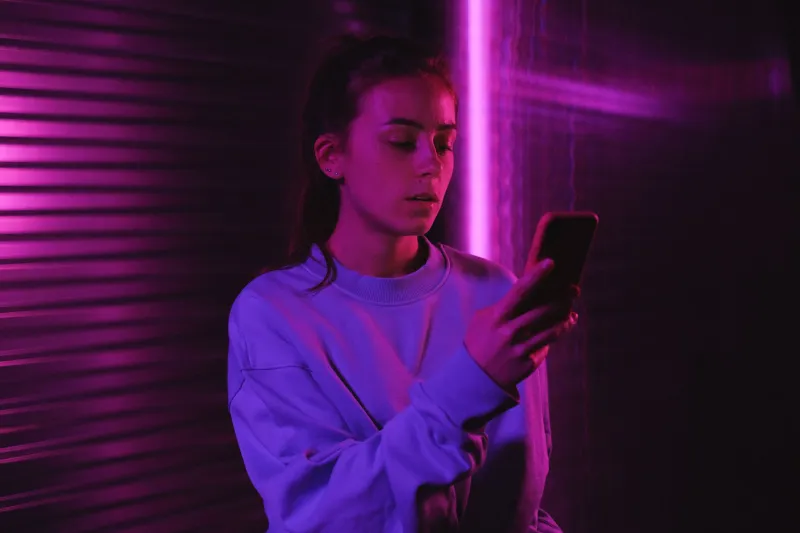
Spend five minutes talking to any working musician or artist who built their audience on Instagram or TikTok, and you'll hear the same story. The algorithm changes. The reach tanks. You spend more time producing content about your work than actually making the work. You optimize your posting schedule, your caption length, your thumbnail strategy. You stop asking "is this good?" and start asking "will this perform?"
It's an exhausting, creativity-flattening treadmill. And the payout — even for creators with substantial followings — is often shockingly thin. The platforms extract enormous value from creative labor while returning a fraction of it to the people doing the actual creating.
So some of them stopped playing.
The Private Discord as Creative Sanctuary
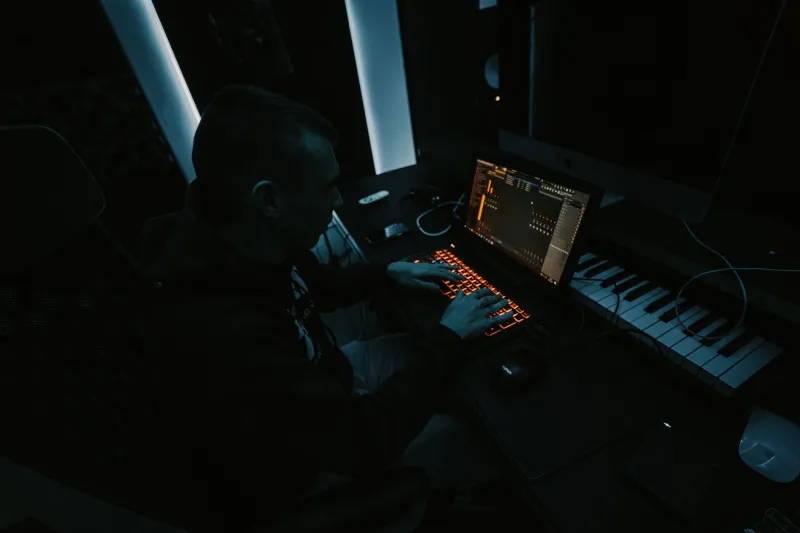
Discord was built for gamers. Now it's quietly becoming one of the most interesting creative infrastructure tools available. Musicians are using it to build intimate communities around their work — spaces where a few hundred deeply invested fans get early access to demos, behind-the-scenes process content, and direct conversation with the artist.
The economics of this are genuinely compelling. A musician with 50,000 Instagram followers might earn almost nothing from that audience directly. But a musician with 500 paying Discord community members at $10 a month? That's $5,000 in monthly recurring revenue, a room full of people who actually care, and zero algorithm to appease.
The quality of engagement in these spaces is also categorically different. When someone pays to be in a community — or earns an invite through demonstrated commitment — they show up differently. The conversations are deeper. The feedback is more honest. The relationship between creator and audience starts to resemble something more like a genuine creative exchange than a content consumption transaction.
Producers are sharing stems with their communities and co-writing tracks with members. Visual artists are letting their inner circles vote on which direction a series goes next. The audience becomes a collaborator. That's a fundamentally different model than broadcasting into the void and hoping the algorithm rewards you.
NFT Communities and the Invite-Only Aesthetic
The NFT world — despite its chaotic and often legitimately problematic history — produced one genuinely interesting cultural experiment: the token-gated community. The idea that ownership of a digital asset grants access to a specific creative space introduced a new kind of exclusivity to digital culture.
At its best, this created intimate ecosystems where artists and collectors had real skin in the game, real shared investment in the work. Musicians like RAC and artists operating in the generative art space built communities where access meant something. Where showing up wasn't passive.
At its worst, it became speculation theater. But the underlying impulse — using scarcity and genuine commitment as filters for who gets in — that idea has legs beyond the crypto context. Creators across disciplines are borrowing the logic even without the blockchain infrastructure. Application-based fan communities. Waitlists. Referral-only access. The velvet rope, digitized.
What 'Success' Actually Means Now
This is where things get philosophically interesting. For a long time, the creator economy ran on a very specific definition of success: maximum reach. More eyes, more ears, more followers. Growth at all costs.
But that metric was always a proxy. What creators actually want — what most humans actually want — is impact. Connection. The sense that their work is reaching people who genuinely receive it. And it turns out that a massive, algorithmically assembled audience is a pretty terrible way to achieve that.
There's a concept in music that's useful here: the difference between a stadium show and a club show. The stadium is impressive. The numbers are undeniable. But the club show — 300 people who really came to see you, who know the words, who are fully present — that's where something actually happens. That's where the music becomes a shared experience rather than a spectacle.
Creators building private communities are choosing the club show. Repeatedly. On purpose.
The Fragmentation Problem
Here's where I want to push back a little, because this trend isn't without real costs.
When creative culture fragments into a thousand invite-only rooms, we lose something. The public square — messy and loud and imperfect as it was — allowed for unexpected collisions. A kid in rural Ohio stumbling onto an avant-garde electronic musician because the algorithm, for once, did something right. A visual artist discovering a literary movement they had no reason to know about.
Private communities, by design, pre-filter who gets in. And those filters — however well-intentioned — tend to replicate existing networks. Who you already know. Who can afford the membership. Who has the cultural literacy to find the door in the first place.
The rebellion against algorithmic monoculture is valid and necessary. But building walls isn't automatically the same as building something better. The question creators have to sit with is whether they're creating genuine intimacy or just a more aesthetically pleasing kind of exclusion.
The Honest Bet
Maybe the most radical thing about this trend is what it says about where creators think culture is actually made. Not in virality. Not in reach. In depth. In rooms where people actually give a damn.
That bet might be right. Or it might turn out that the private communities of today become the calcified institutions of tomorrow — new gatekeepers wearing the aesthetic of rebellion.
Either way, the creators closing their doors are asking a question the whole culture needs to reckon with: What is an audience actually for? And what are you willing to trade to have one that's real?