No Label, No Problem: The Renegade Musicians Dropping Music on the Blockchain
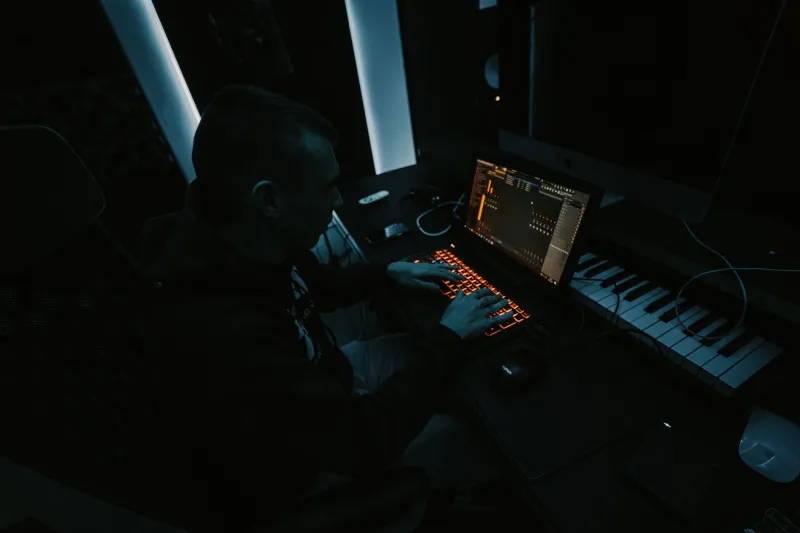
Picture this: It's 3 a.m. in a home studio somewhere in Detroit. An artist finishes a track — something weird, something that doesn't fit neatly into any playlist algorithm's category. Distorted synths over footwork rhythms with field recordings of highway traffic woven through the mix. Three years ago, this track would have gone into a hard drive folder labeled "too weird to release." Tonight, it goes straight to a smart contract on the Ethereum blockchain, priced at 0.08 ETH, and by morning, 47 collectors from six different countries have bought it.
No label. No distributor. No gatekeeper deciding whether the world was ready for it. Just the music, the artist, and a decentralized network of people who wanted in.
This is the Web3 music scene in 2024, and it's more alive — and more complicated — than the hype cycle ever told you.
The Problem With the Old Model (You Already Know This)
Let's be real. The traditional music industry has always been a bad deal for most artists. Streaming platforms pay fractions of a cent per play, meaning you need millions of streams to make rent. Labels advance money that artists spend years paying back before they see a dime of actual profit. Sync licensing, publishing rights, and master ownership create labyrinthine structures that leave creators holding almost none of the value they generate.
For experimental and avant-garde musicians — the people making music that doesn't fit neatly into genre buckets — the situation is even grimmer. You're not getting a Spotify editorial playlist push. You're not landing a major label deal. You're playing to 200 people at a DIY venue in Bushwick and hoping someone buys a cassette tape.
Blockchain-based distribution isn't a perfect solution to any of this. But for a specific kind of artist with a specific kind of audience, it's opened doors that used to be welded shut.
The Platforms Changing the Game
A handful of platforms have emerged as the infrastructure for this movement, each with a distinct vibe and community.
Sound.xyz has become the go-to for experimental electronic artists and indie musicians who want to drop music as collectible NFTs. The model is elegant: artists release a limited number of "editions" of a track — say, 25 copies at a fixed price — and early collectors get a special on-chain record of their patronage. It's less about flipping for profit and more about building a community of genuine supporters who have skin in the game.
Catalog operates on a one-of-one model — each track is a unique NFT, more like a fine art auction than a streaming release. This has attracted artists who want their work treated as singular cultural objects rather than infinitely reproducible content. Prices on Catalog can range from a few hundred dollars to tens of thousands, depending on the artist's reputation and the collector community around them.
Audius takes a different angle entirely — it's a decentralized streaming platform where artists upload music directly and get paid in the platform's native token when fans listen. It's not perfect, and the token economics are volatile, but it's attracted serious artists who want an alternative to Spotify's take-it-or-leave-it royalty structure.
Then there are the DAOs — Decentralized Autonomous Organizations — that are doing some of the most genuinely experimental stuff. Water & Music is a research DAO where musicians, technologists, and fans collaborate on understanding and shaping the future of the industry. Arpeggi (now Verse) built an on-chain music studio where artists compose directly on the blockchain. These aren't just distribution tools; they're rethinking what a music community even looks like.
Artists Who Are Actually Making It Work
The narrative around NFT music got poisoned by the 2021-2022 bubble, when everyone from legacy pop stars to crypto bros was dropping overpriced jpegs and calling it a revolution. But underneath all that noise, a quieter cohort of artists was building something real.
Danielle Ponder, a Rochester-based soul artist, used NFT drops on Sound.xyz to fund an entire album independently — no label advance, no compromise on creative control. She's talked openly in interviews about how collecting her own masters from day one changed her relationship to her music entirely.
In the electronic underground, producers like Oshi and Reo Cragun have used Web3 drops not just as revenue streams but as community-building tools — giving NFT holders early access to unreleased tracks, voting rights on tour setlists, and direct Discord access. The NFT becomes less a financial instrument and more a membership card to an inner circle.
Then there's the genuinely avant-garde end of the spectrum. Artists releasing generative music NFTs — where the track itself is algorithmically composed at the moment of minting, meaning every collector owns a unique version — are pushing the format into genuinely experimental territory. This is music that couldn't exist in the old industry framework at all.
The Limitations Nobody Wants to Talk About
Okay, but let's pump the brakes for a second, because the Web3 music space has some serious structural issues that deserve honest examination.
First: the audience is still tiny. The overlap between "people who own crypto wallets" and "people who want to buy experimental music" is growing, but it's still a niche within a niche. Most independent artists who've tried blockchain drops report selling to the same small community of Web3 enthusiasts rather than breaking into genuinely new audiences.
Second: the technical friction is real. Asking a casual music fan to set up a MetaMask wallet, buy ETH, navigate gas fees, and complete a transaction is a massive ask compared to hitting play on Spotify. Until that UX gap closes significantly, mainstream adoption remains a distant prospect.
Third: the environmental conversation hasn't gone away. Ethereum's move to proof-of-stake dramatically reduced its energy consumption, but the broader crypto ecosystem still carries significant environmental baggage, and artists who care about sustainability have to weigh that.
And finally: the volatility of token-based compensation means that what looks like a good deal today might be worth significantly less tomorrow. Artists who got paid in ETH during the 2021 peak and held through the bear market know this lesson intimately.
The Bigger Picture
Here's what's actually exciting about the Web3 music scene, stripped of the hype: it's proving that artists don't need institutions to validate their work or monetize their creativity. The infrastructure for direct artist-to-fan relationships is being built in real time, and even if the current tools are clunky and the audience is small, the direction is right.
For experimental and avant-garde musicians especially — the people making music that algorithms can't categorize and labels can't market — this represents something genuinely new. A way to build a sustainable creative practice on the margins of the mainstream, funded by a global community of people who actually get what you're doing.
At Gaigoi Zalo, that's the story we're here for. Not the celebrity cash grabs or the speculative bubbles. The artists at 3 a.m. in Detroit, making something weird and beautiful and unmistakably theirs — and finding out there are 47 strangers across the planet who were waiting for exactly that.
The gatekeepers are losing their grip. Slowly, messily, imperfectly — but losing it. And that feels like the beginning of something worth paying attention to.